7. Life in the Diaspora from the Early Middle Ages to the 16th Century

Jewish Quarter, Cordoba (Spain)

Jewish Quarter in Fez (Morocco)
Not everyone returned from Babylon
after the exile in the 6th century BCE, so there was a constant Jewish community in the area. After the defeat of the Bar Kochba uprising, and then in the 4th century, many Jews came to Babylon from Palestine, and the spiritual center of Judaism was transferred to Babylonia. They had their own public administration, “political” leader, the exilarch (resh galuta = the leader/head of the outcasts). Their most important centers were Surah, Pumbedita and Nehardea, where many high-level Torah-studying colleges were opened. The Babylonian rabbis closed the Babylonian Talmud in 499 – which contained the Mishnah and its explanations made by the Babylonian rabbis with pros and cons, often with humor and instructive stories – which has a great influence on Jewish life even today. Up till the first half of the 6-11th century, the spiritual leader of the Babylonian Jewish community was called a gaon (genius, excellency), their task was to answer the religious, scientific and everyday life questions.
8th century
– Among the Muslims there was a division: the Sunnites accepted the verbal tradition, the Hadis also besides the Quran, while the Shiites accepted only the Quran. This affected the Jews also: Anan ben David started the Karaite ([Bible] reader) movement. The Karaites just like the Sadducees earlier, did not accept the verbal tradition as compulsory to the Jewish people. They criticized the Talmud and leaned on only the Hebrew Scripture, and they interpreted it excessively literally, and in practice they were more rigorous than the mainstream Judaism (Rabbinates = ones who accept the opinions of the rabbis). Others were influenced by the Greek philosophy. Opposing all these, one of the most known spiritual leaders was Saadia Gaon in the 10th century.
10–12th century
– The unified Arab Caliphate was spilt up and the smaller principalities often fought each other. With the disintegration of the unified eastern culture, the institution of the gaons was abolished in 1040, the spiritual center of the Jews was transferred to Hispania, which was under Muslim control, and to North-Africa. The Jews living here were called Sephardi (Spanish). In the following centuries many spiritual giants, rabbis, Platonic or Aristotelian philosophers, poets, doctors were born in this region, e.g.: Shmuel HaNagid, Solomon ibn Gabirol, Judah Halevi, Rabbi Moshe ben Maimon (Maimonides) etc.
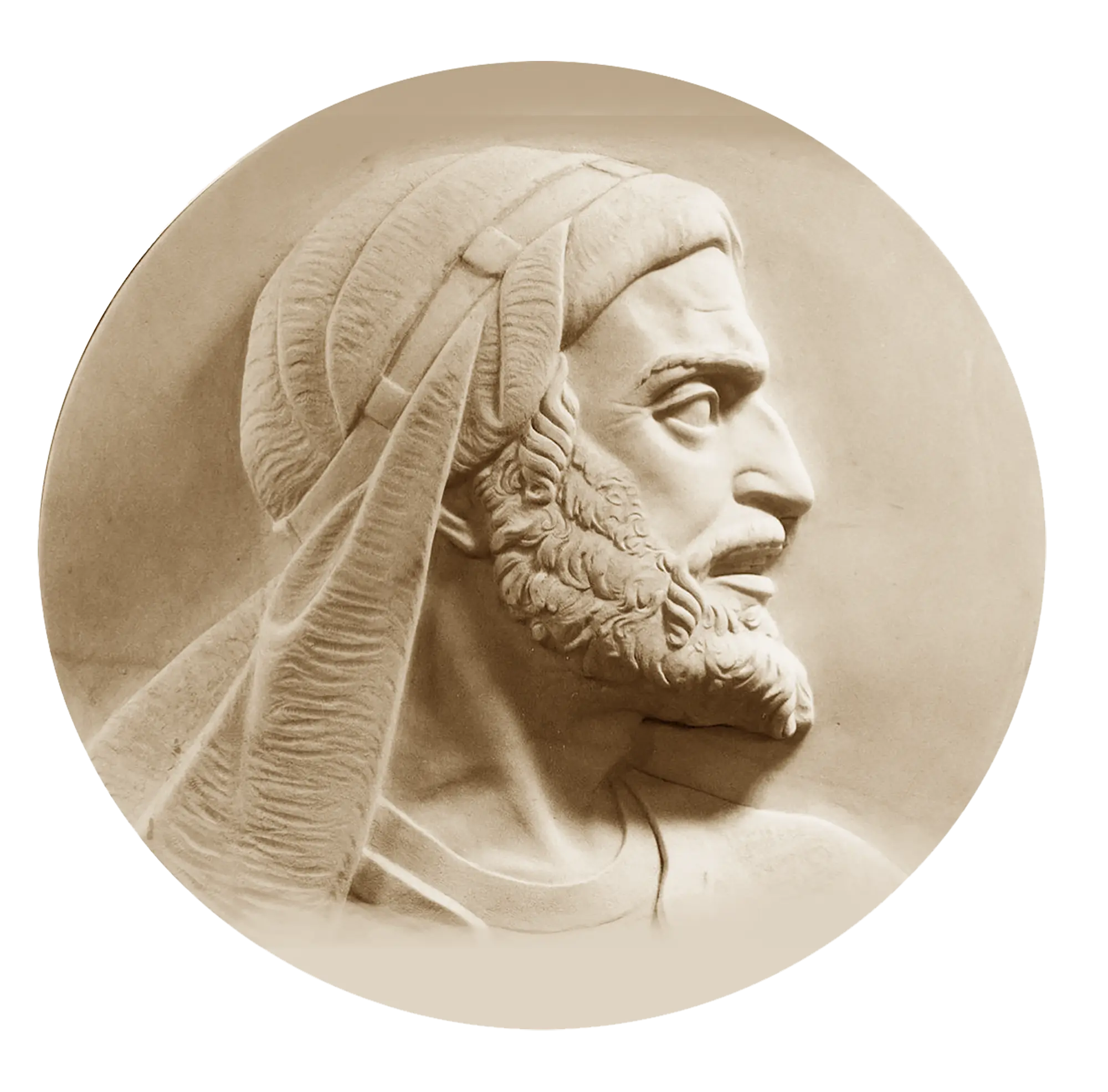
Maimonides
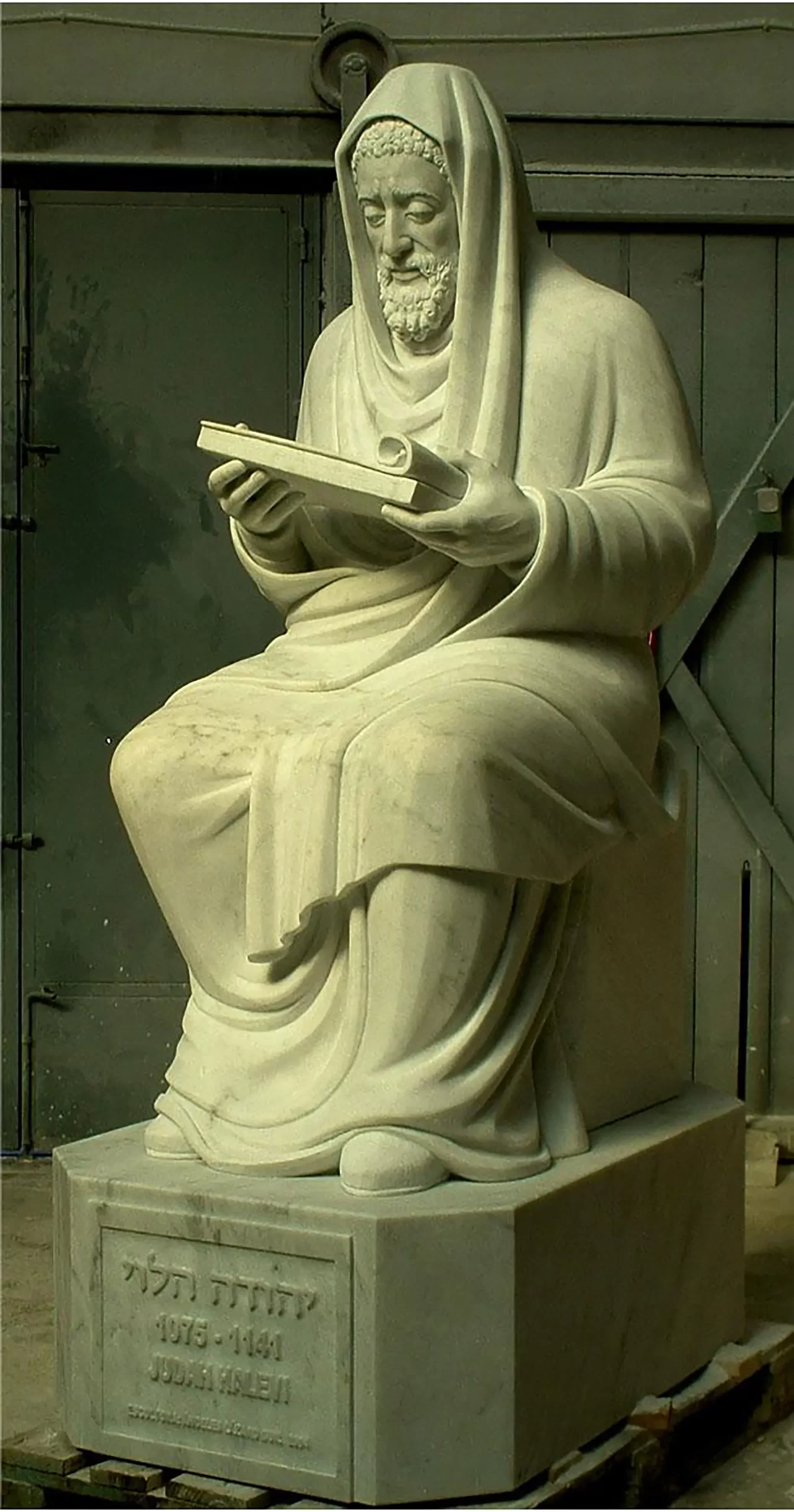
Judah Halevi
The Jewish population
appeared at places of the former Western-Roman Empire after the destruction of the Sanctuary. They settled in Italian, French and German areas as well. The Jews were called in these areas Ashkenazi (German) and their well-being depended on the actual emperor’s resistance against the Christian anti-Jewism with which their theology was more and more filled. Significant communities appeared in France and the Rhine-area. On the areas under Christian authority, the Jews lived mostly of trade. By the end of the 10th century, many Jews settled in the Northern-European and Slavic countries and in England as well.
The most important communities of the Rhine-area,
who were also famous for their trade were in Worms, Mainz and Speyer. These cities could untie themselves from their rulers by various taxes, so a more or less free atmosphere was created for the Jewish communities and for the scientific improvements. The most significant rabbi of the 11th century in the area was: Rabbenu Gershom who introduced monogamy among Ashkenazi Jews with the support of a hundred rabbis. Although, Rashi (Rabbi Shlomo Yitzhaki), who came from Troyes, also studied in the yeshivas of Worms and the area, was the most significant rabbi who commented on the Scriptures and the Talmud in the Middle Ages, whose authority is notable up to this day.
11–13th century
– At the time of the crusades, the crusaders were filled with hope for treasures and with religious ideologies, so they harassed, murdered and despoiled many Jewish communities. The Jewish life totally changed during the crusades: The Church almost only allowed one job for them: handling the finances. The Church despised finances, thus the Jews became the bankers of Europe. Religious lies were spread among the society (blood and wafer accusations), which were supported by religious speeches and superstitious incitements. Thus, as a consequence of deceptions, many Jews were prosecuted. The credit registries were abolished during the pogroms, depriving the Jewish families from their only official source of income.
1215
– At the Lateran synod IV, several anti-Jewish orders were introduced by Pope Innocent III. Among many orders, they ordered the Jews to wear distinguishing clothes – pointed cap, a particular type of coat and a yellow patch – to live in separate districts (ghettos), to pay tithes to the Church, and not to hold a public office. After the synod, the situation for the Jews got worse all over Europe. Due to the pogroms, the communities were financially impossible to maintain, and famous rabbi schools closed. The Pope even prohibited the Talmud; the French king organized many events for burning the Talmud in Paris in the 1240s. Amongst the difficulties, part of the Jewish community was oriented towards the secret teachings. At this time, the Kabbalah, i.e., Jewish mysticism, began to flourish in Hispania.
1348–50
– In Europe, a plague outbreak destroyed one third of the European population. As Judaism contains several rituals and hygienic orders, many of them to prevent sicknesses, only a few got sick among the Jews. Thus, the host nations accused the Jews with well poisonings, spreading out the plague and they killed a large number of Jews in different areas of Europe. The whole population of the Jews reduced by the 14th century to 1.5 million from the 8 million in the 1st century.
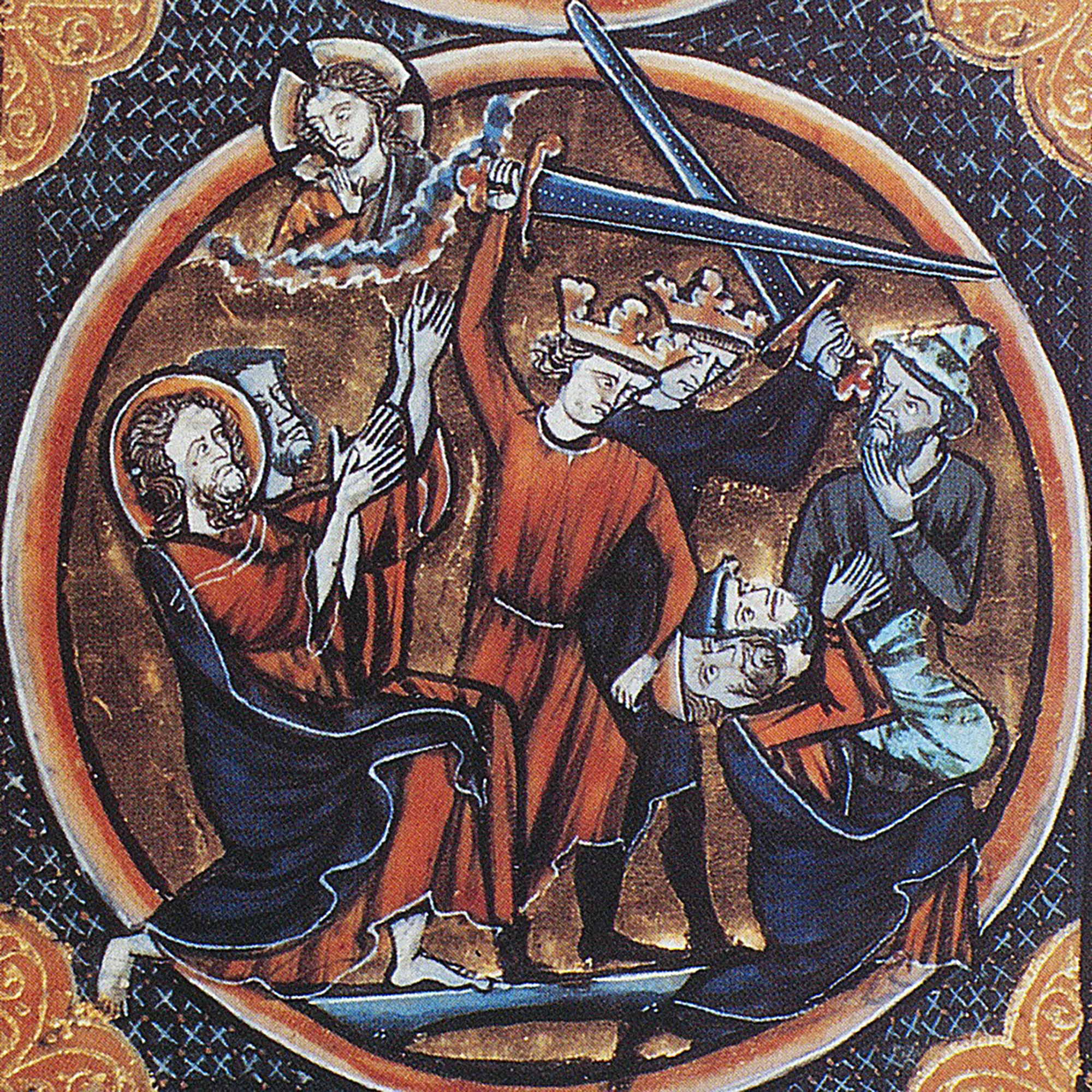
Crusaders kill Jews
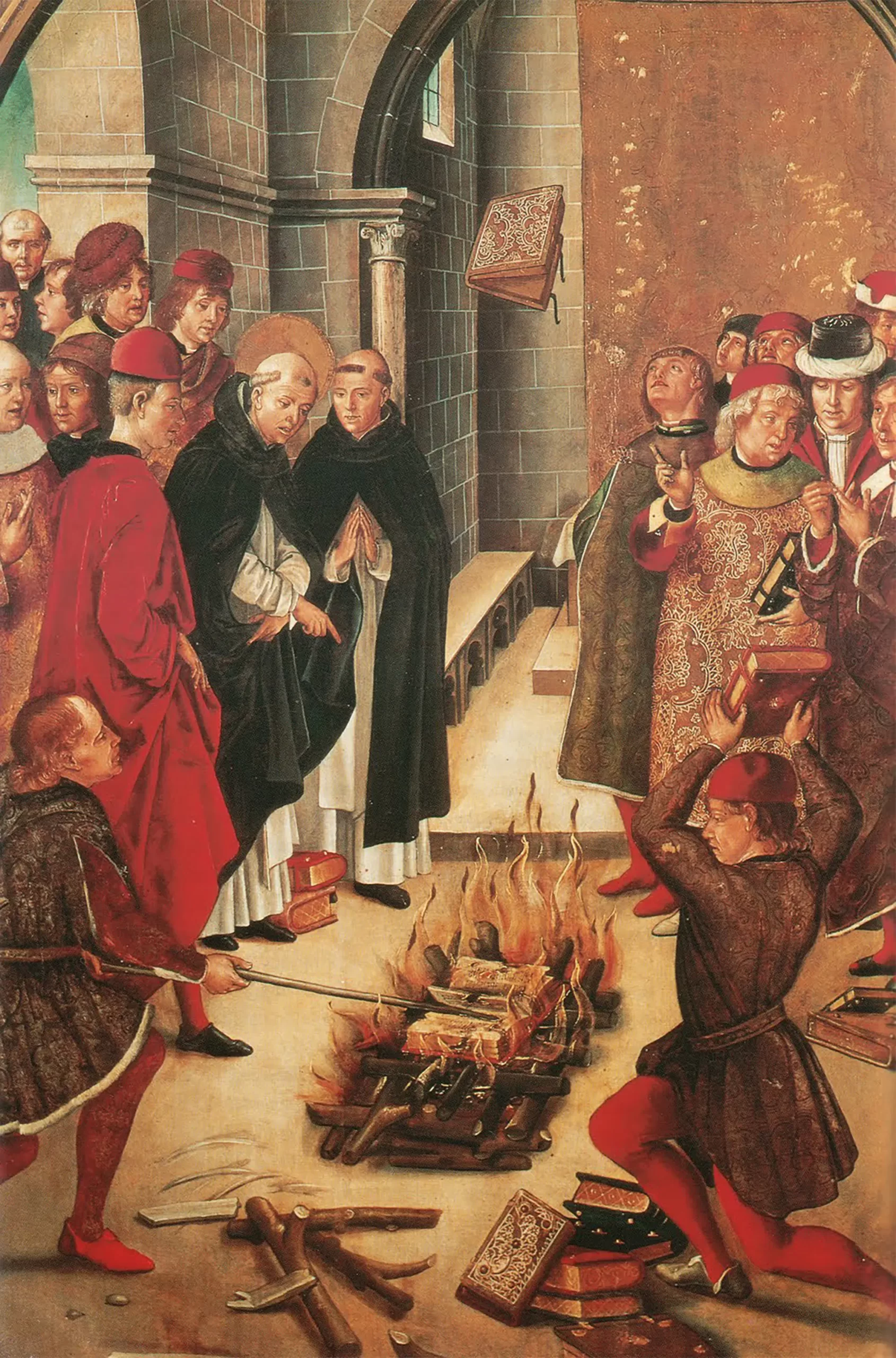
Talmud burning
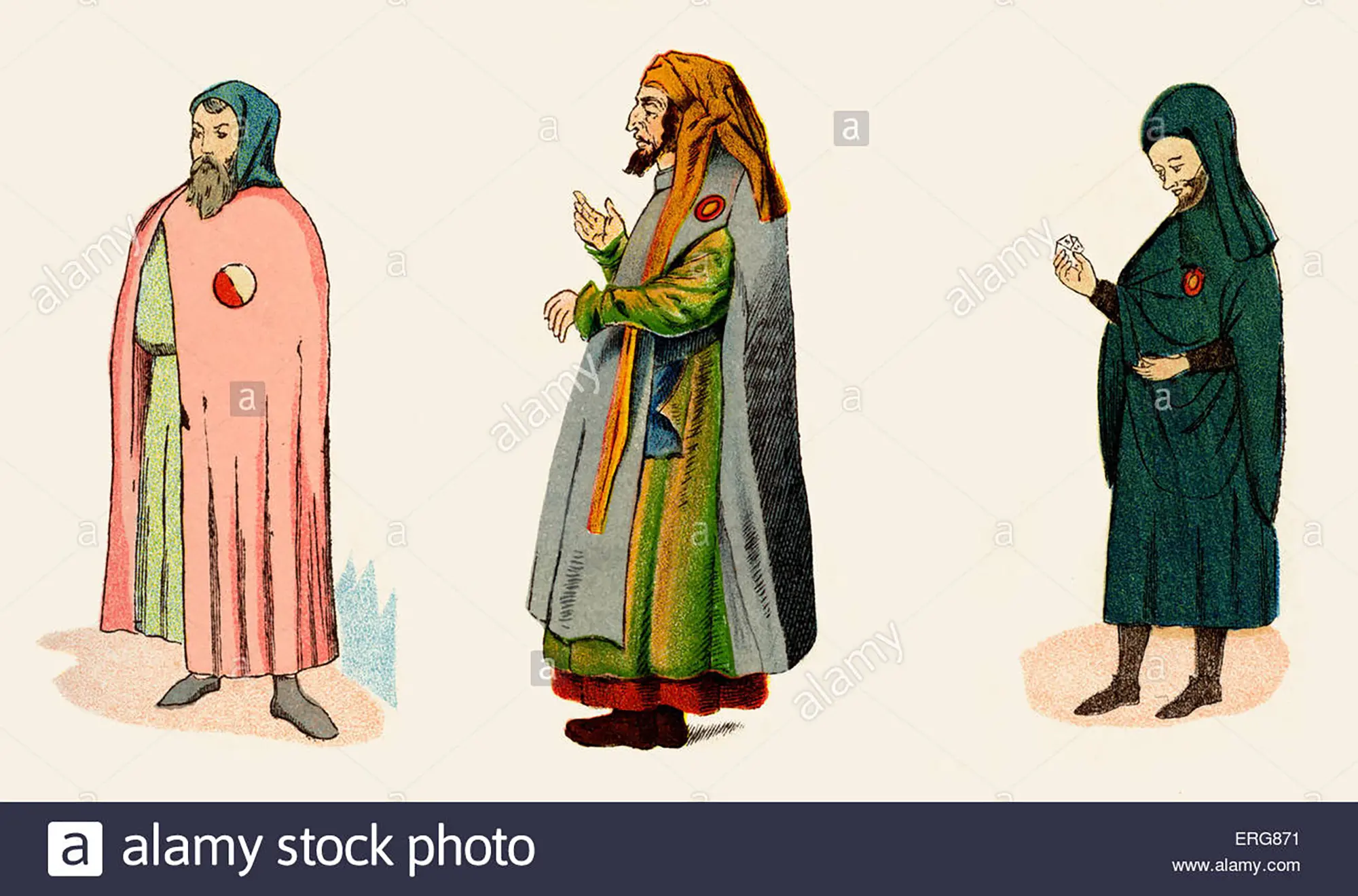
Distinctive clothes and signs

„Plaguedoctor”
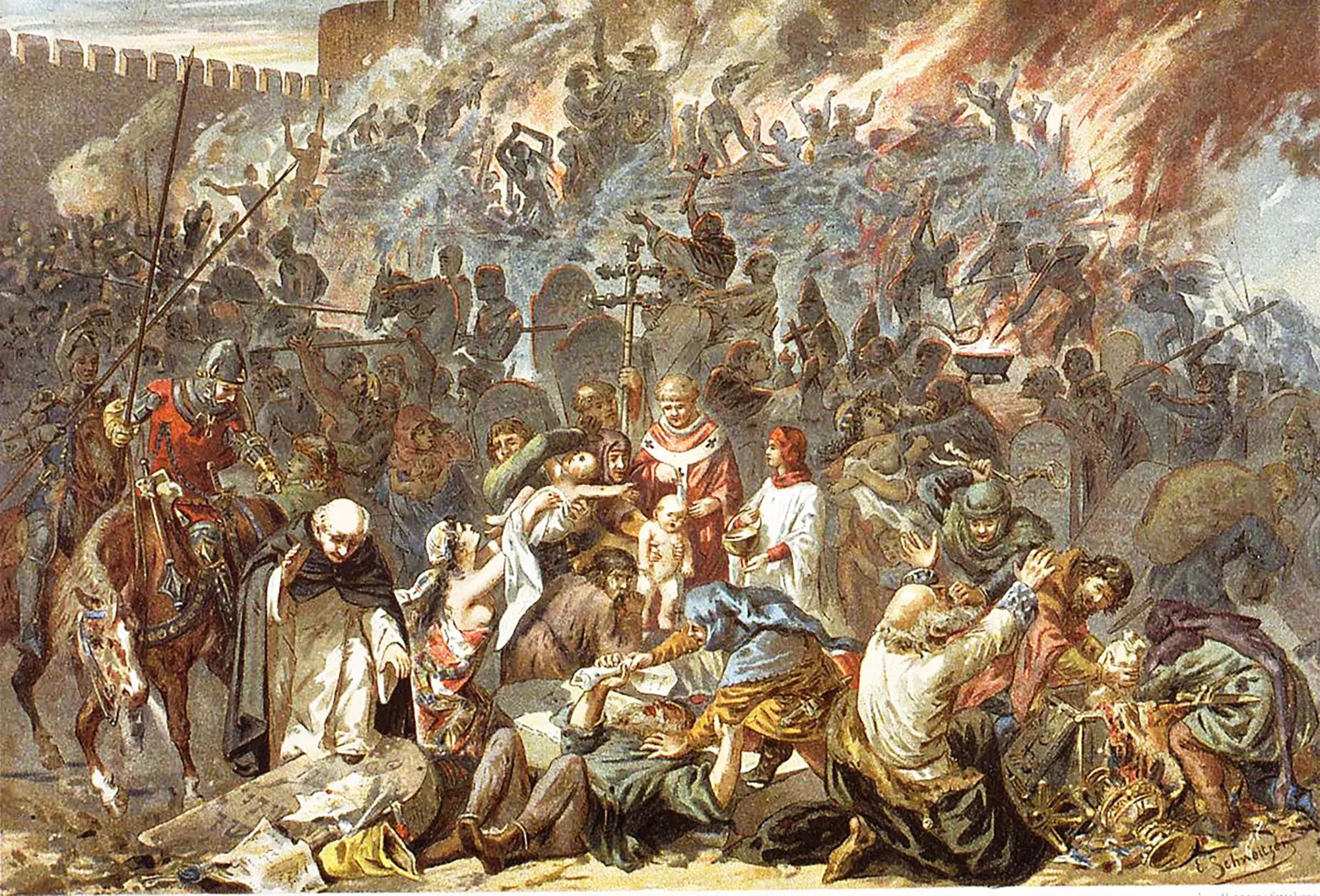
Émile Schweitzer: Pogrom in Strasbourg in 1349

Jewish burning in Cologne (1349)
Due to the persecutions,
many Jews converted to Christianity. At first the Church welcomed those who converted, though later as they got into higher positions, they started to persecute them again: many Christian Jews were accused with still living a Jewish life secretly. In 1478 the Pope permitted the introduction of the official Spanish inquisition (a court organized against heretics). The Jews who were thought to be “fake-Christians” were called marrano (pig) and with fake accusations they were given to the inquisition. The excited followers of the Church tortured and burnt thousands, now not for religious reasons but in the name of “clear blood”. The wealth of the murdered Jews was given to the royal treasury.
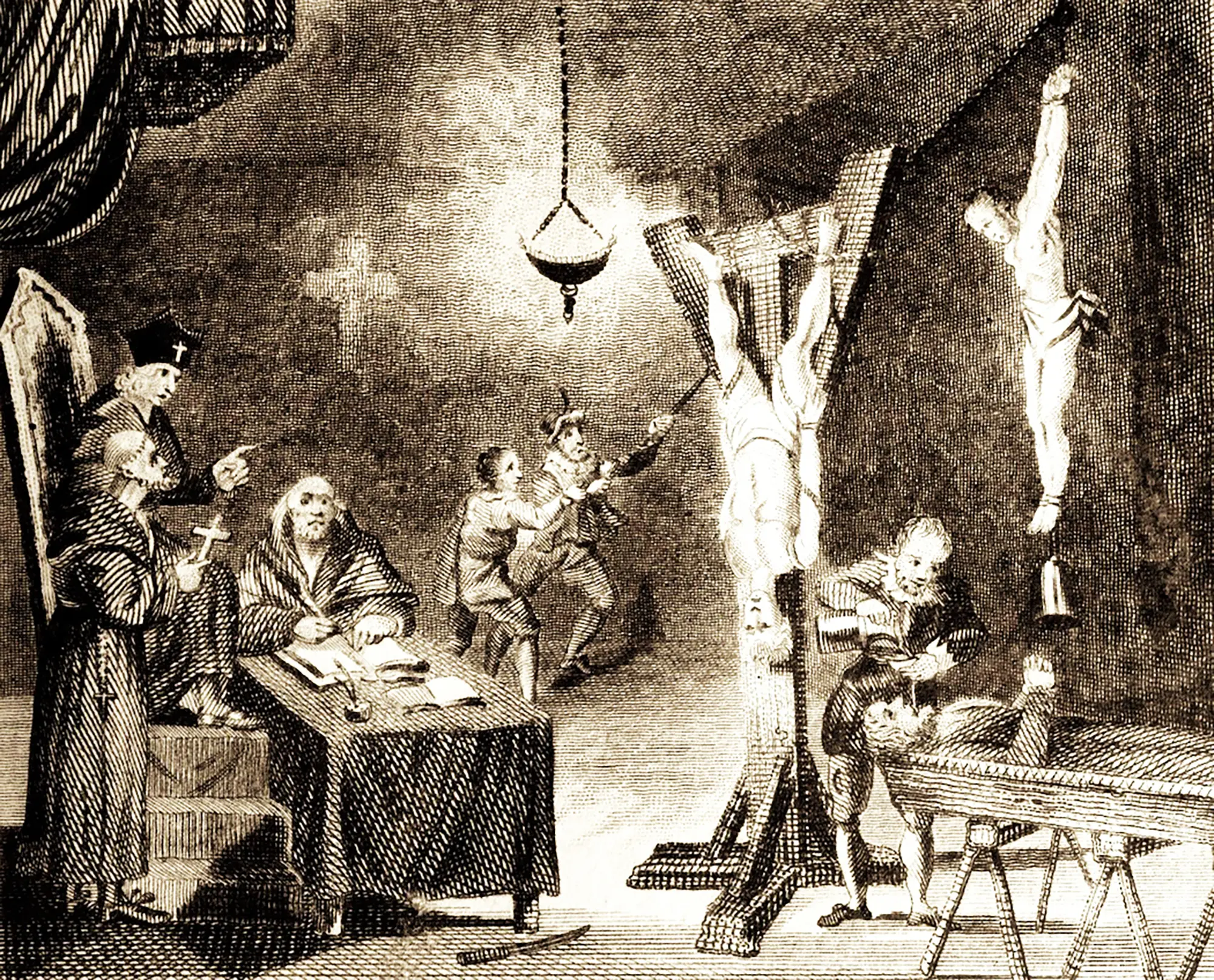
Spanish Inquisition
In the Middle Ages the Jews were expelled from many countries;
from England in 1290, from France in 1395, from Spain in 1492, from Portugal in 1497 and from Germany and Italy in the 15th century. The Sephardi Jews settled mostly in Turkey, but later also in France, the Netherlands, England and in the German-Roman Empire. Many went to the land of Israel as well, they settled mostly in Jerusalem, Safed, Tiberias and Hebron, and they created communities, synagogues and yeshivas. The center is the city of Safed where the Kabbalah flourishes and Joseph Karo also found refuge here – the rabbi who developed the lifestyle laws in the Shulchan Aruch (Set Table), which is still important among the Orthodoxies. Others went to Middle and East Europe, as they could freely settle in small villages as well as in Prague, Vienna and other larger cities.
The situation of the Italian Jews was a bit better compared to the other European regions. They were the first to join the modern technical developments at the end of the Middle Ages. After Gutenberg invents book printing in 1450, several Hebrew printing houses were opened (e.g., in Reggio and Soncino). The Renaissance and Humanism resulted in appreciation for the Hebrew language and literature among Italians, and the interest towards Hebrew literature grew. Daniel Bomberg, for example printed the whole Talmud with permission from the Pope.
1517
– The Reformation began, which affected the Jews positively because instead of the Catholic traditions the Biblical texts were in focus – including the Old Testament. At the same time, Luther did not succeed in wiping out the anti-Semitic doctrines which had been founded deeply into Christian doctrines in the early centuries. Moreover, in 1543, in his book On the Jews and Their Lies, he wrote against the Jews and encouraged his followers to destroy synagogues. In the early years of the Reformation, the Jews were seriously harmed by the reformers. However, with the appearance of national Bible translations all over Europe, more and more people learnt about Jewish history and prophets. On the other hand, the rivalry between Catholics and Protestants awakened the desire for religious and conscience freedom, so the Reformation corresponds to the continuance of the emancipation of different religious organizations – including Judaism as well.
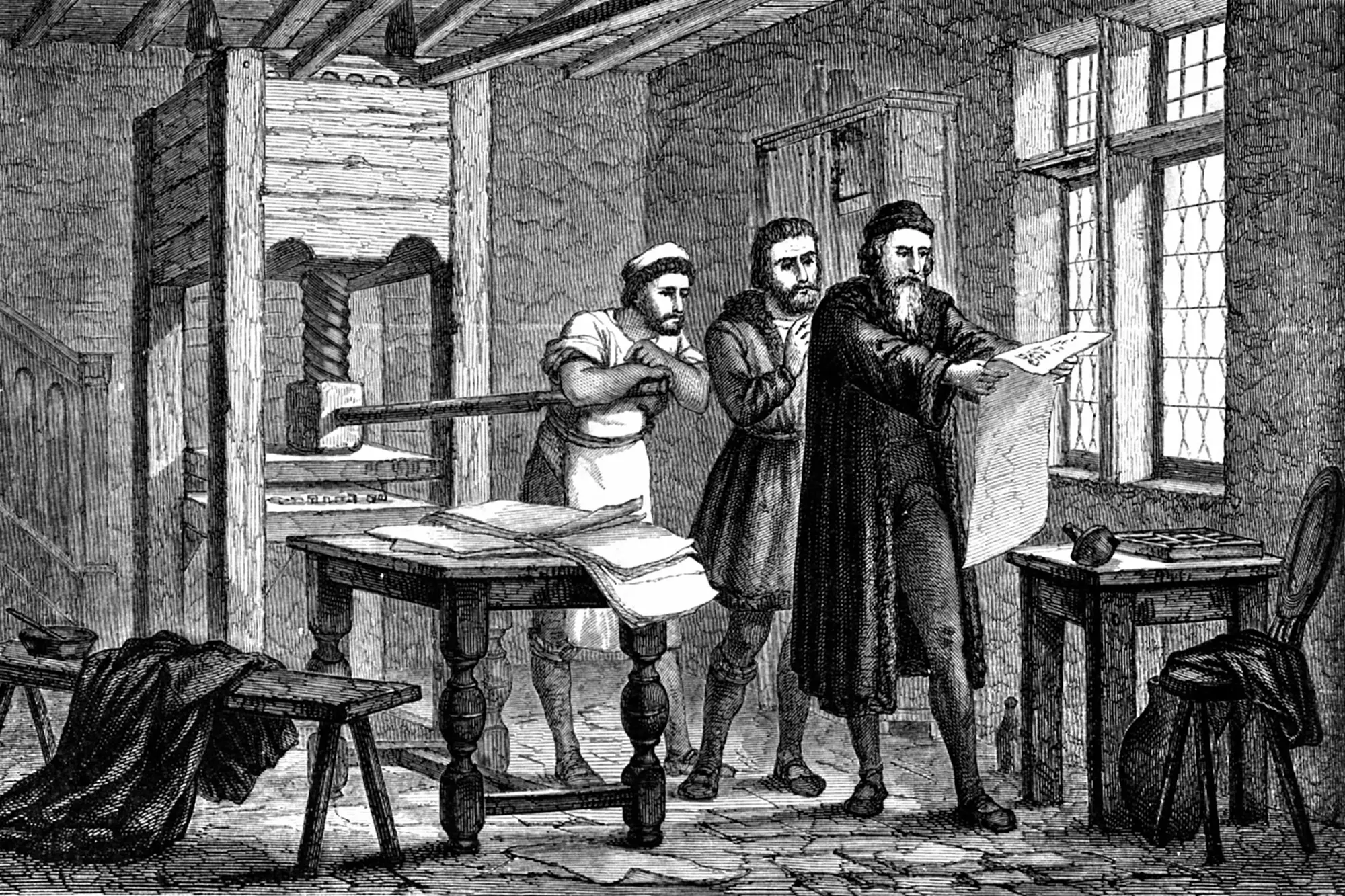
Gutenberg’s printing press
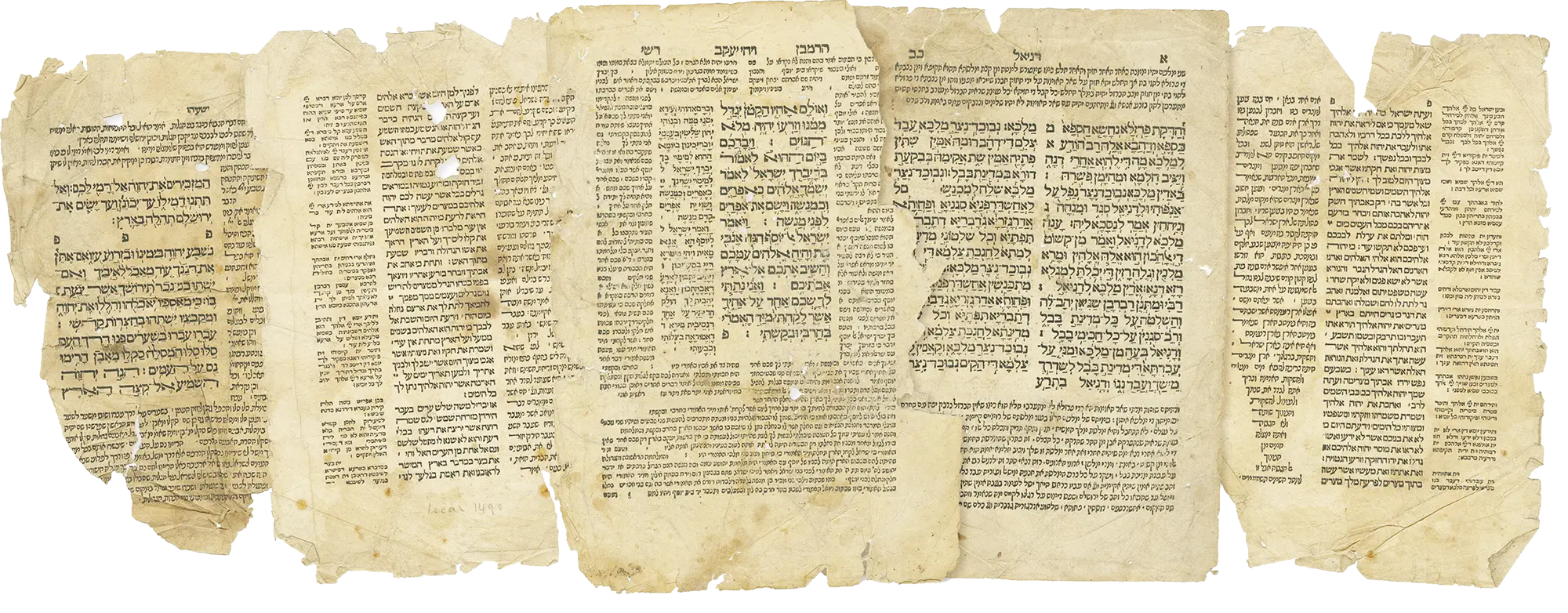
Talmud printed by Daniel Bomberg
The Jewish fate became more and more grueling
with numerous persecutions, and the Jews were filled with hope for the arrival of the Messiah over and over again. Over time, there are several self-appointed Messiahs who were often followed by large crowds. In the 12th century, David Alroy appeared in Bagdad and was killed by the Arabs. In 1520, David Reubeni appeared in Rome, and with the Portuguese Solomon Molcho they organized an expedition to liberate the Holy Land. Reubeni was imprisoned by the inquisition in Spain, while Molcho was burnt on a bonfire. The largest fake-Messiah movement officiated in the 17th century.
In the Middle Ages,
different “Hebrew languages” appeared. The Ladino is a mixture of Spanish and Hebrew which was spoken by the Sephardi Jews; Yiddish is a language mixed with German and Slavic features which is used in the ultra-Orthodox communities even today.

