2. From the Foundation of the United Monarchy to the Return from the Babylonian Exile
1050–332 BCE
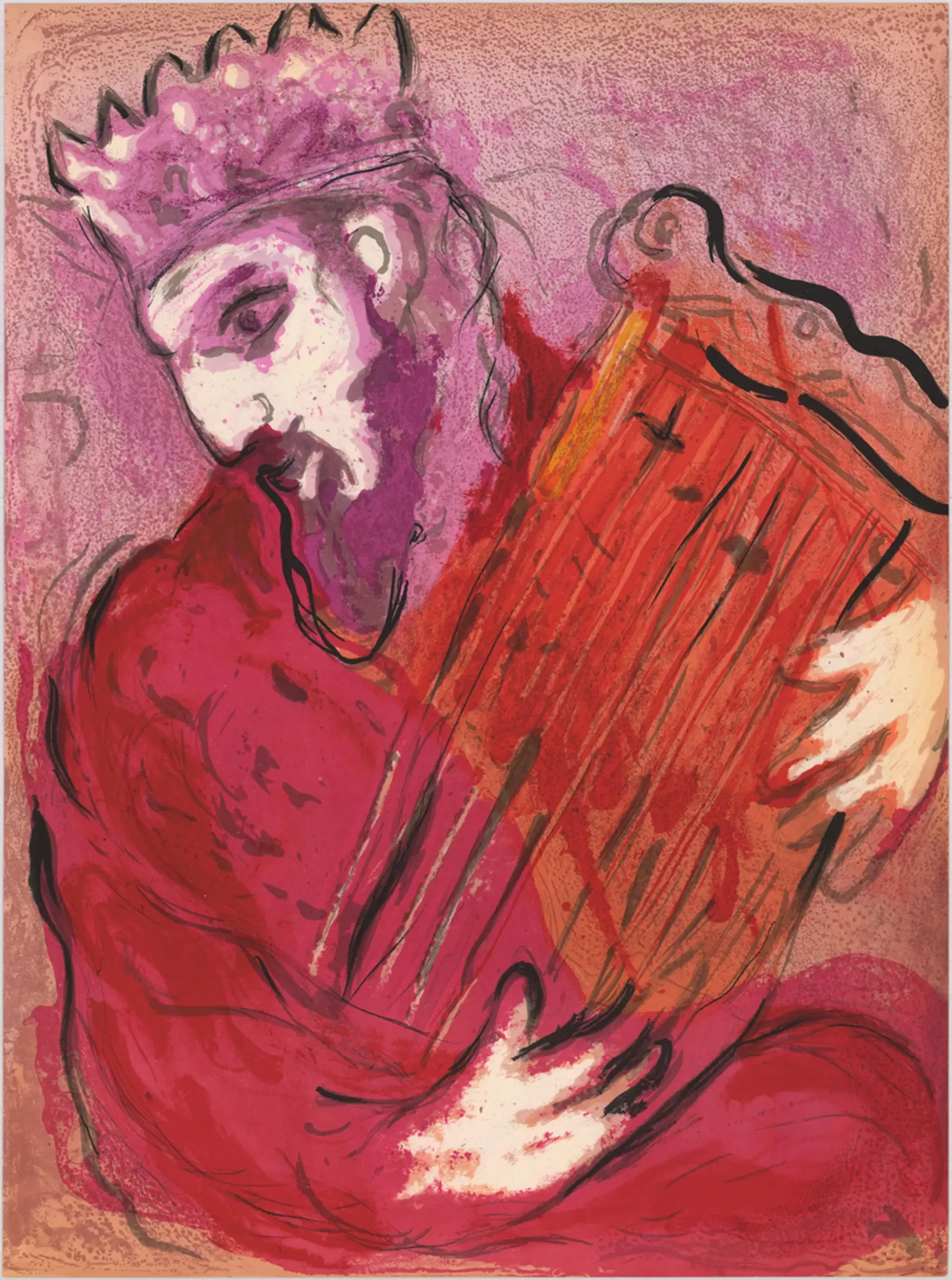
Marc Chagall: King David
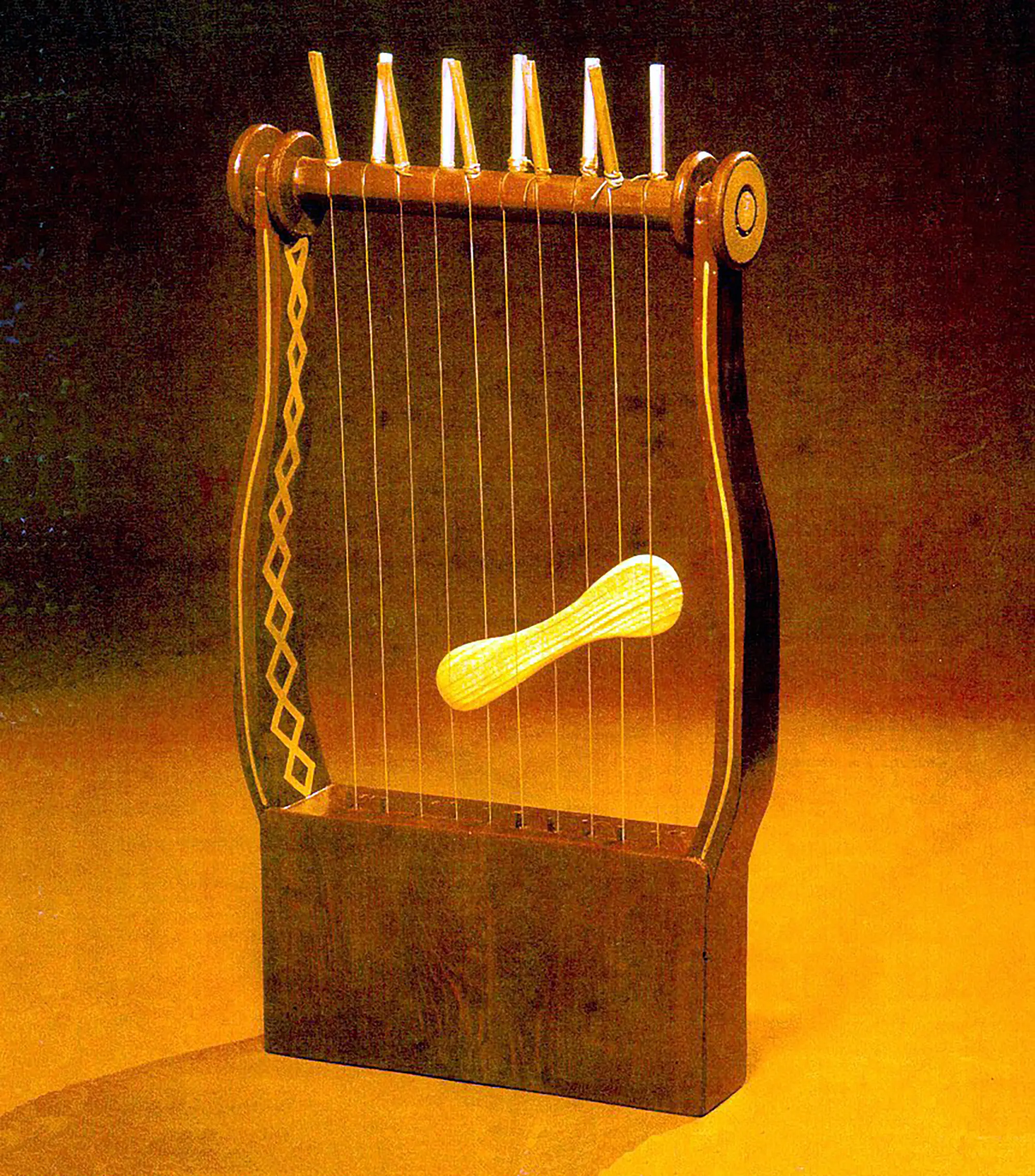
Ten-string harp from the 6th century BC
Around 1050–1010
– The elders of Israel went to the prophet, Samuel, and asked him to appoint a king to the people. The Lord saw the people’s wish as a contempt for his reign, still he allowed them to choose a king. The first king of Israel was from the tribe of Benjamin, Saul.
Around 1010–970
– The second king of Israel was David (Beloved / In love), and according to the Bible he was “like the heart of God”.
Around 1004
– David conquered Jerusalem (Teaching and manifestation of peace fulness debt-free state, repayment / The integrity of the fear of God / The integrity of the worship of God), and made it the capital of Israel. In the fortress of the lower town, Zion (Marked / Rewarded / Special / Outstanding), David built his own palace and a tent where the ark of God was put. The Ark of Covenant is surrounded by a twenty-four-hour worship service, and this goes on for more than forty years. This was where most of the Book of Psalms was born. Meanwhile, the Tabernacle of Moses was standing in Gibeon, where the offerings required by God were held, tied with worship as well. The division of the worship was necessary as God had not yet given guidance about the permanent place of worship.
The place of the Temple
was assigned through the fault and repentance of David. After David’s census, the Lord punished the country with pestilence. Many people lost their lives, however the Almighty intervened on Mount Moriah, to stop the decay. He gave David a command to build an altar and to make an atoning sacrifice. The place still belonged to the Jebusite Ornan (Araunah), David bought it for fifty silver shekels. After David’s offering the decay stopped.
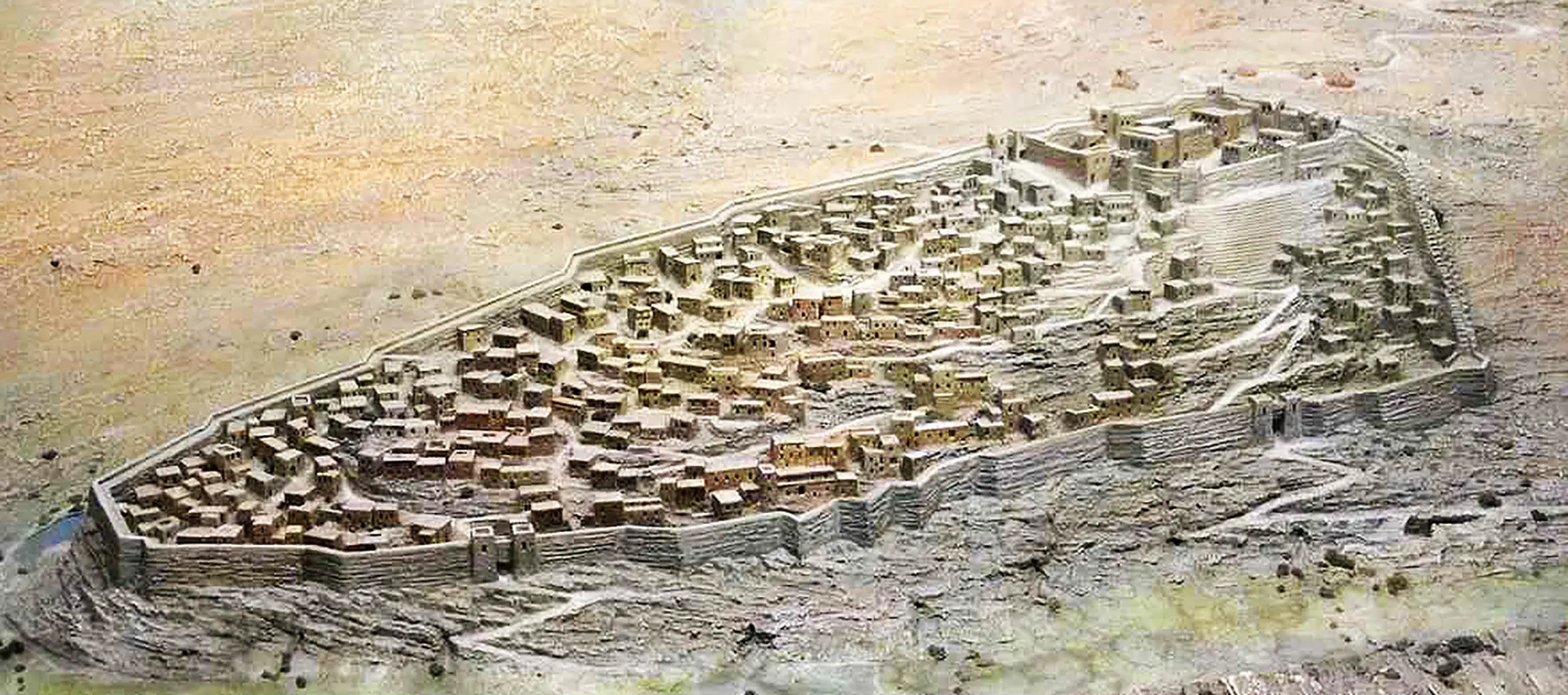
City of David (Zion)
970–930
– After the death of David, Solomon (Peace / Fulness) followed him on the throne. Many of the wisdom books of the Bible come from Solomon; such as the Proverbs, the Ecclesiastes, and an “opera” about a love story, the Song of Songs. Under Solomon’s reign, Israel lived a fruitful, ri ch and happy era.
960
– According to the designs of Solomon’s father, David, the First Temple was built, which united the worship of the city of David and the worship of Gibeon. The priests made the offerings ordered by Moses there, and the Ark of Covenant was placed in the Holy of Holies. Jerusalem became the eternal residence of the Lord, and the place of permanent lifesaving interventions. At the dedication of the Temple, Solomon asked God to listen to the prayers of the Jews and the people of other nations as well when they prayed there or facing the house.
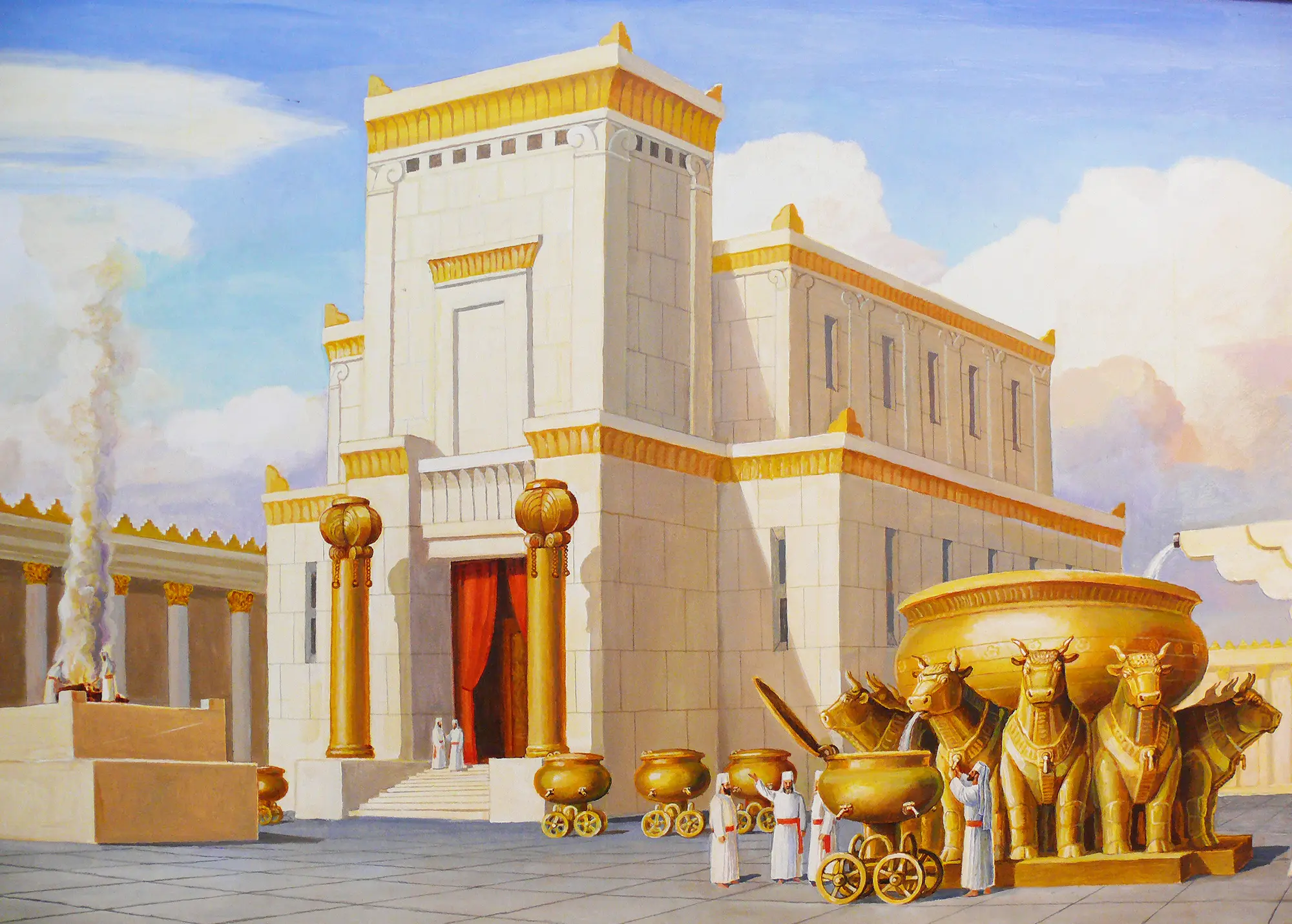
Temple of Solomon
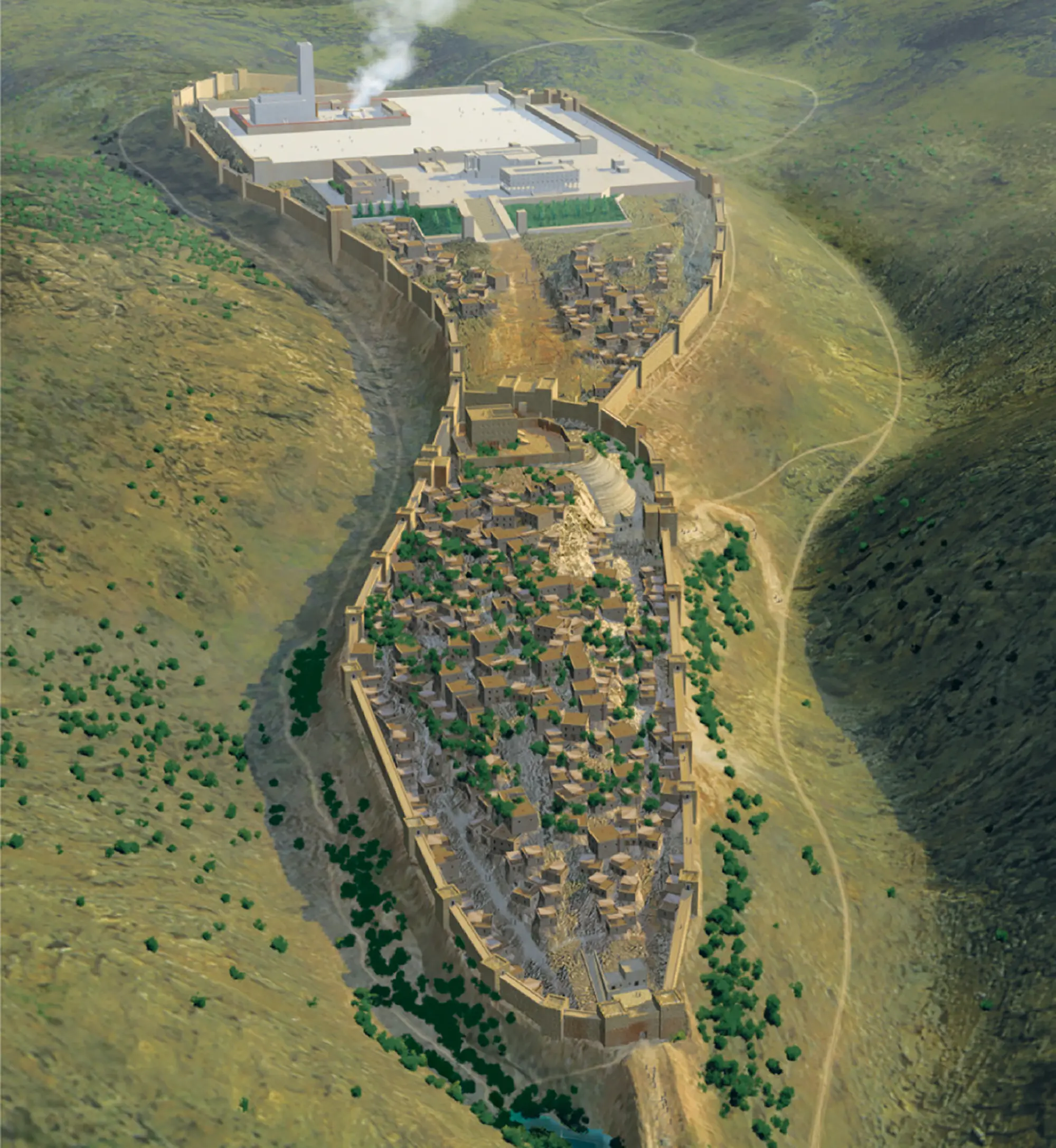
Jerusalem in the time of Solomon
930
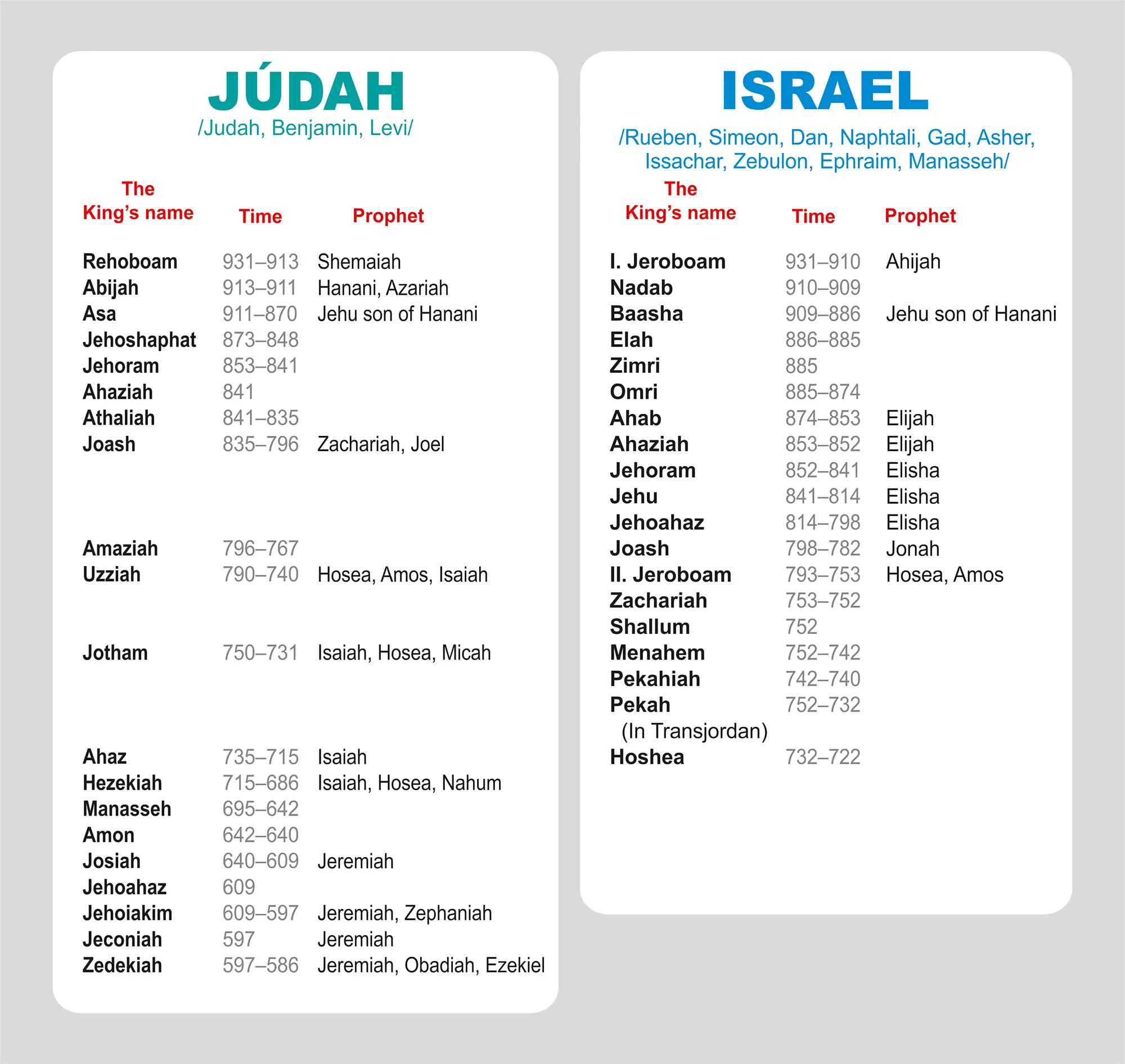
– After the death of Solomon, the country was divided into two parts. The tribe of Judah, Benjamin and the Levites stayed with Rehoboam, Solomon’s successor, and they kept Jerusalem as their capital. The rest of the tribes of Israel had Jeroboam as king. Israel turned away from the center appointed by God, their capital was Samaria in Dan, they started to worship idols in Bethel.
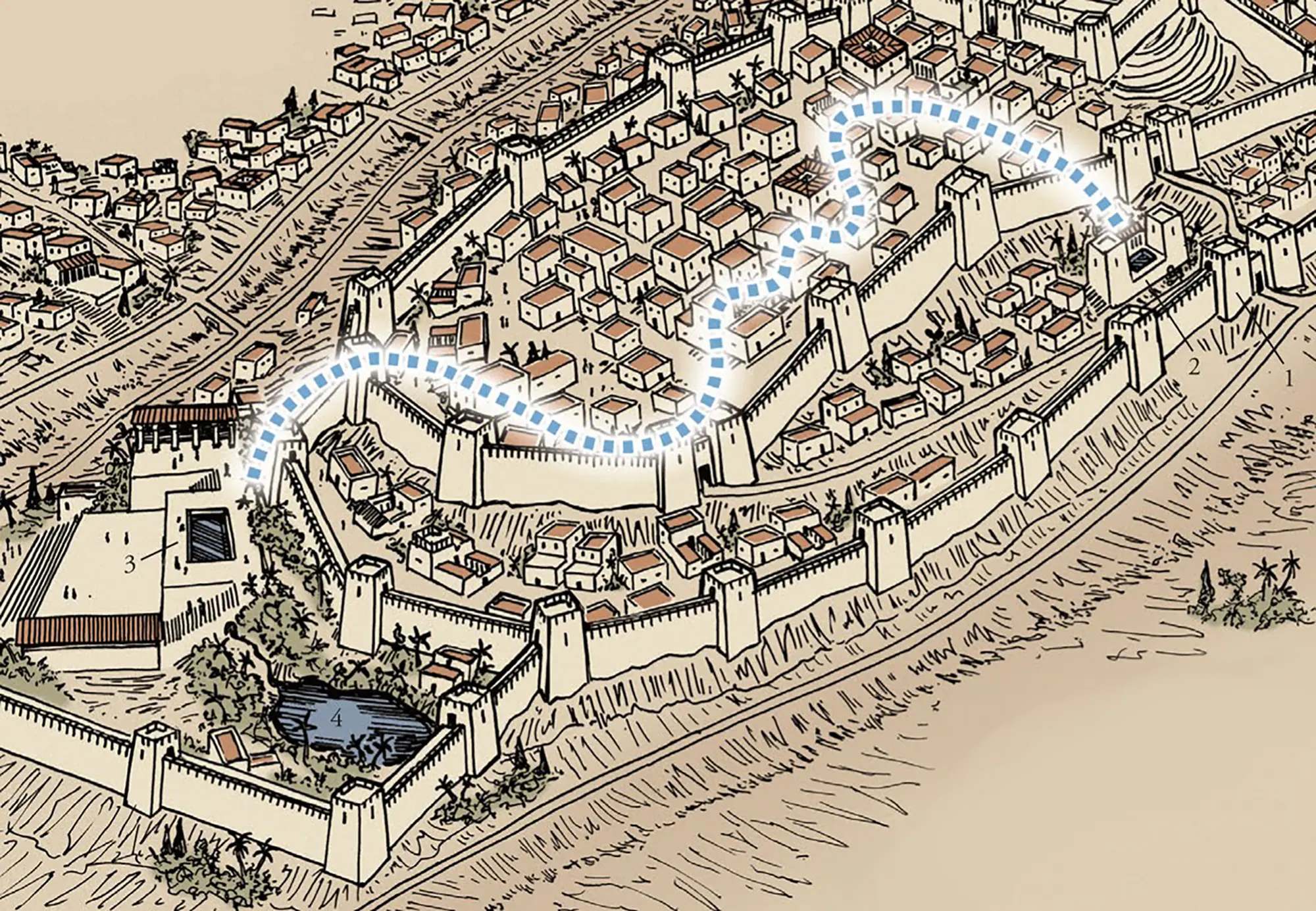
The canal of Hezekiah
930–722
– Israel and Judah constantly fought with each other. Israel turned away from the Torah almost immediately, their idolatry was followed by drastic moral destruction. At the time of Ahab and Jezebel the country reaches its nadir. Elijah the prophet, his disciple Elisha, and later many prophets communicated the Lord’s judgement: if they did not repent, the consequence and curse of the disobedience to the Torah would come into effect, the people would lose their homes and would be sent to diaspora.
722–720
– Samaria was occupied by the Assur king; the independence of Israel vanished. The ten tribes were deported to Assyria, across the river Tyger (the region of Kurdistan nowadays), and to Israel other occupied, idolatrous people were deported. They were called Samaritans in the Bible.
Meanwhile,
not everything went right in Judah either, many kings became idolatrous. The deviation from the Torah caused moral and spiritual decline. Thus, Judah was also exposed to foreign forces’ attacks. As for many good kings though, the exile was suspended. Hezekiah managed to make successful spiritual reforms; he cleansed the Temple, and by all means he tried to restore the authority of the Torah. His life was followed by miraculous deliverances. After the death of Hezekiah, a sixty-year-long era of idolatry and occultism was followed by another good king, Josiah. Josiah, with the help of Hilkiah the High Priest, and Huldah the prophetess, attempted to lead back the people to honoring God and to the Torah. For the restoration of the Temple, he started a foundation, ordered the abolishment of idolatry and occultism in the whole country. In the revival, Jeremiah the prophet took part as well. King Josiah’s good deeds could only delay the exile caused by the nation’s disobedience. Josiah was followed by wicked kings on the throne.
597
– King Nebuchadnezzar of Babylon deported Joaquin and the nobles of the country – around ten thousand people – to Babylon. Ezekiel and Daniel the prophets were also deported.
586
– After an eighteen-month-long attack, Nebuchadnezzar occupied Jerusalem. The walls of the city and Temple were destroyed, and except for the poorest, everyone was abducted to Babylon, while others fled to Egypt. The riches of the Temple were taken to Babylon. Jeremiah the prophet wrote about the grief about the events in the book of Lamentations. The third wave of the deportation is in 582.
Following the advice of Jeremiah,
the people tried to work on the wealth of their cities and to make themselves at home. In the exile, they learnt the Aramaic language, its writings, and they took its letters to write down Hebrew as well. The Jewish people were cleansed from idolatry as a nation. They read the coils and scriptures at houses where they gathered. They keep the Sabbath, and they prayed instead of the offerings in the Temple. Instead of pilgrimages, the appointed festivals were held in rooms which were the “forefathers” of the synagogues. The prophets of the exile were Jeremiah, Ezekiel, and Daniel.
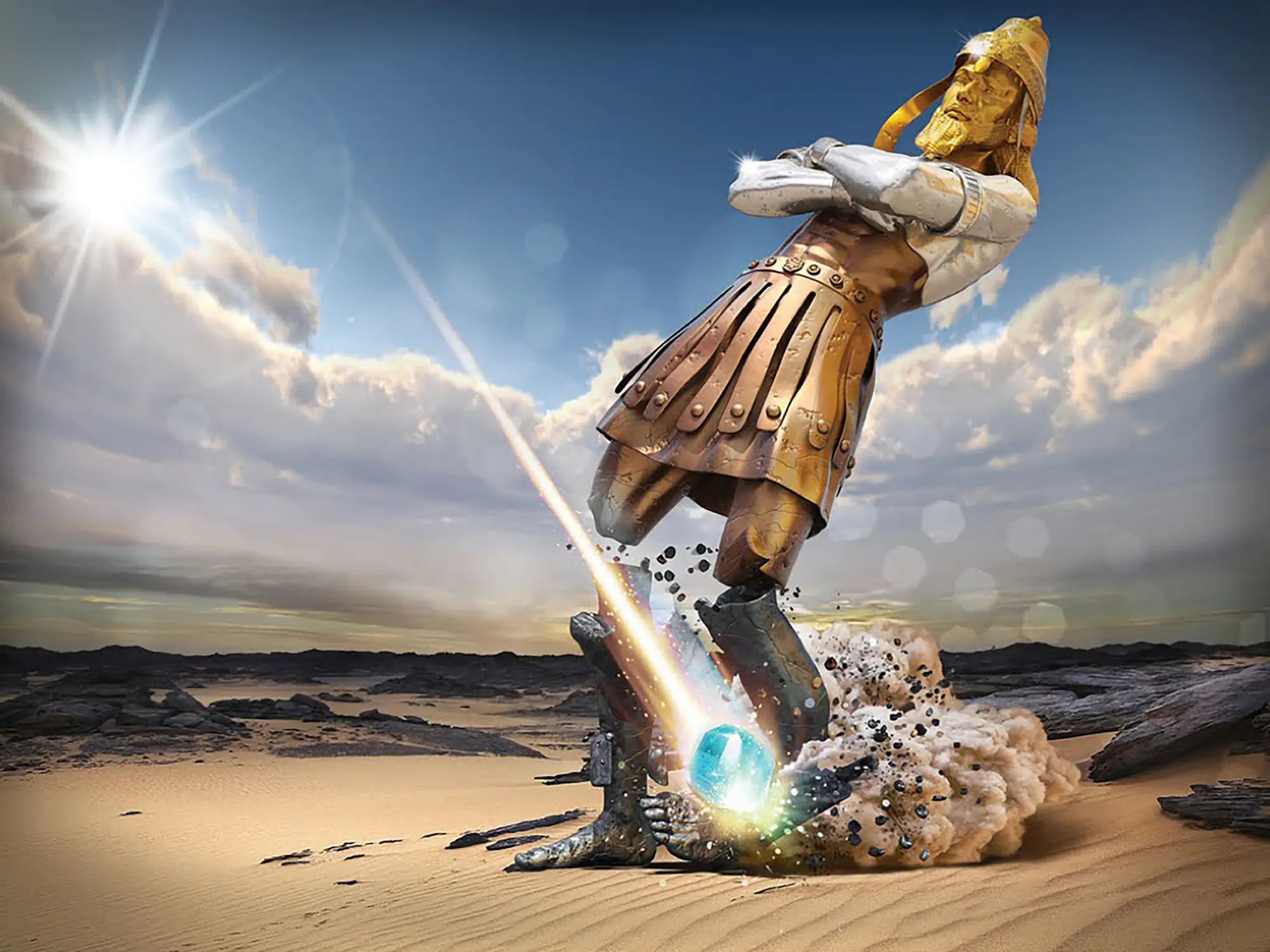
Daniel’s vision of the four world empires
539
– The Persian King Cyrus defeated the Babylonian Empire; the exiled Jewish people were under Persian rule. After entering Babylon, Cyrus allowed the Jews to return to Jerusalem and to rebuild the Temple.
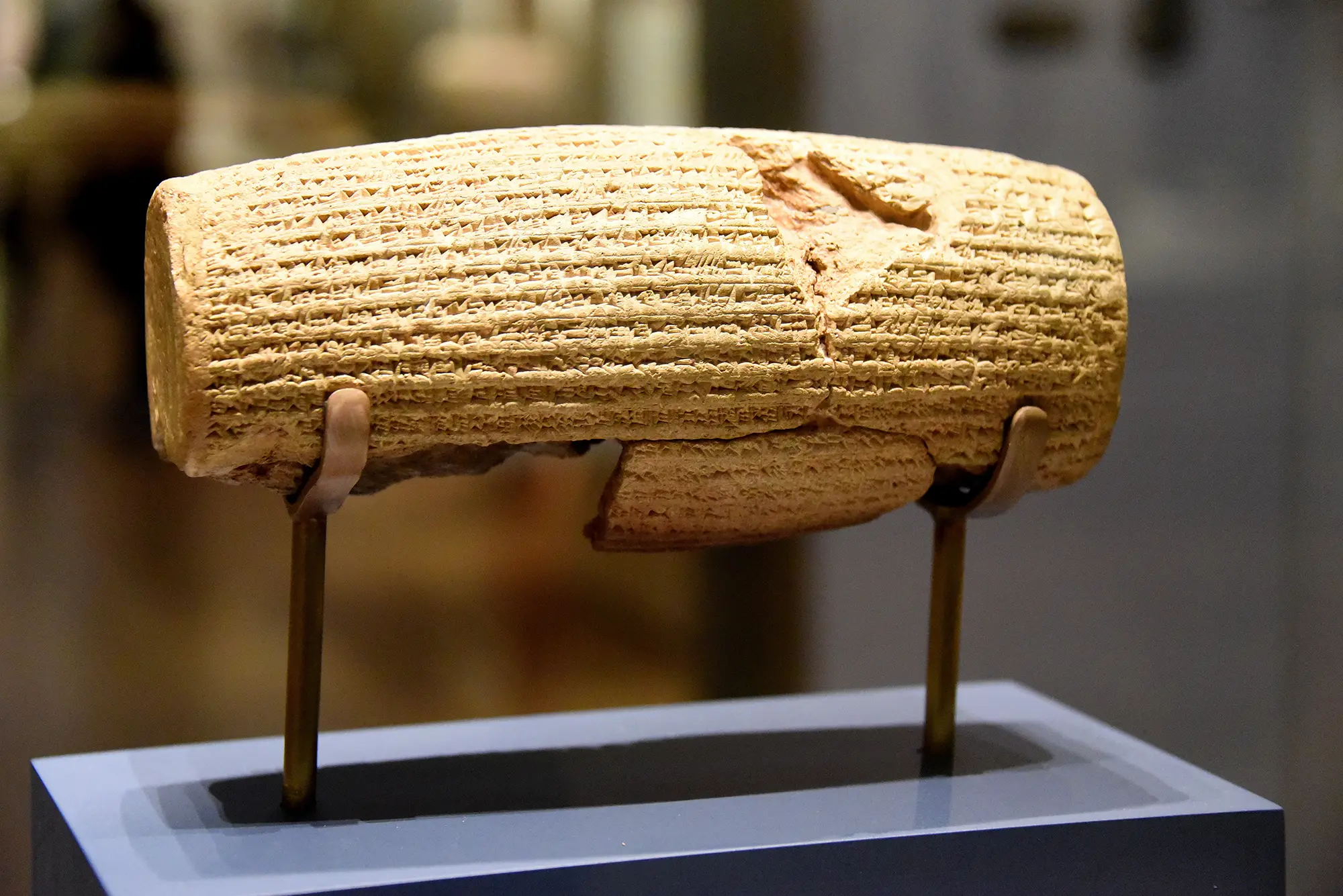
Cyrus’ 23 cm wide cylinder of fired clay from the 6th century BC, bearing the royal decree.
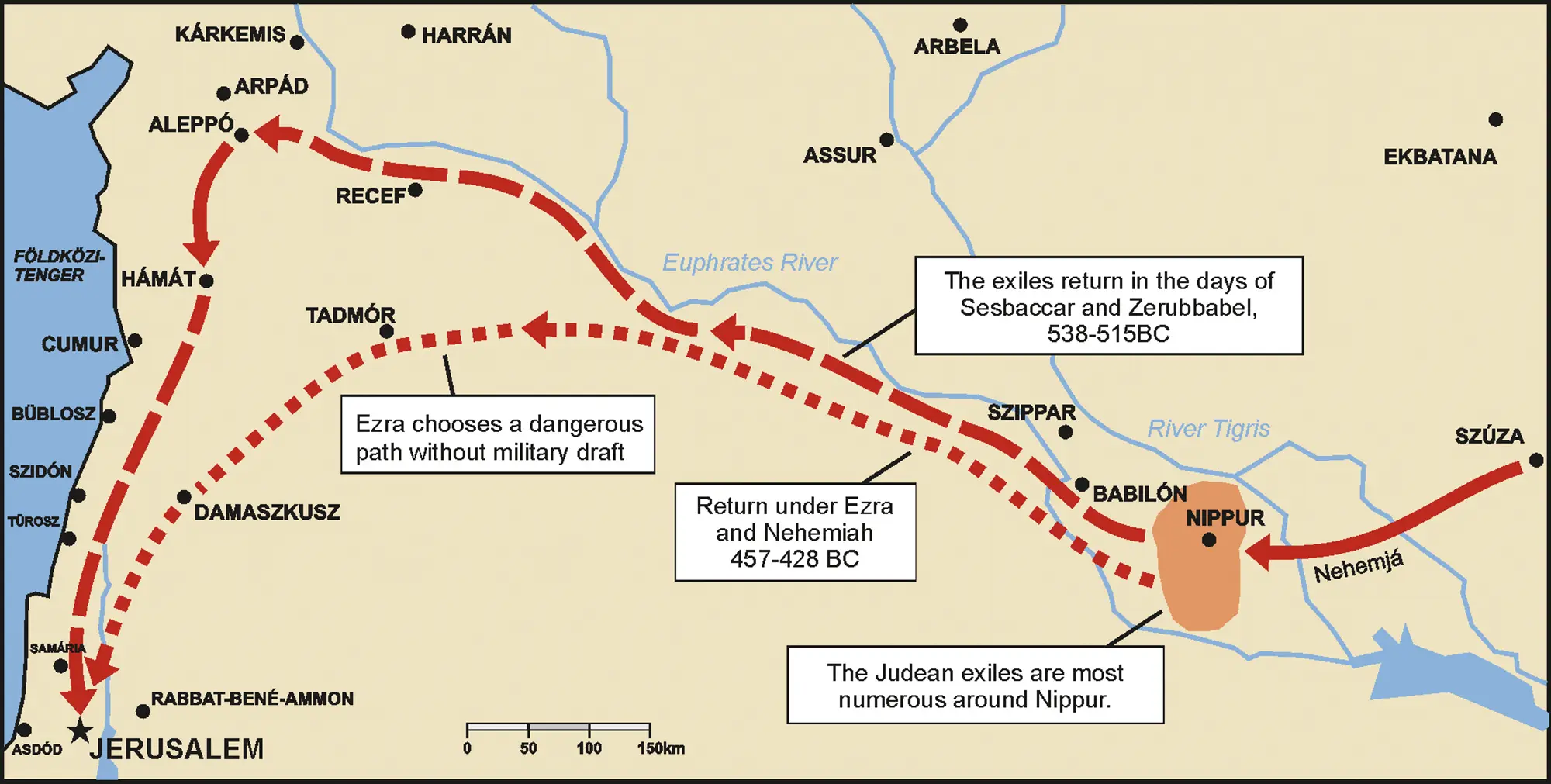
Return to Zion
538
– The people started to return to the land of Israel. Through decades they returned in several waves. The first returners were led by Zorobabel – a duke from the house of David – and Joshua, the High Priest. In Jerusalem, on the Temple Mount, they raised the altar of burnt offerings; in the second year they put down the foundation stone of the Temple. However, as a consequence of the slanders coming from the surrounding nations the construction stopped.
516
– By the encouragement and spiritual patronage of the prophets, Zachariah and Haggai, the Second Temple was built. It came with a promise: “The future splendor of this temple will be greater than that of former times, the Lord who rules over all declares, and in this place, I will give peace” (The Book of Haggai 2:9.)
While some of the Jews returned to their country,
the Jews in the diaspora were traumatized. During the reign of Artaxerxes (480–465) in the capital of the Persian Empire, Susa, the extermination of all the Jews was ordered. The impeller, the Amalekites Haman promised a vast amount of material riches to the king from the extermination and plunderage of the Jews. The events were turned by Queen Esther. The story can be read in the Book of Esther.
458
– The second wave of migration is led by Ezra, the priest.
444
– Nehemiah arrived in Jerusalem and built the walls of the city. Because the reason for the Babylonian exile was deviation from the Law of God, with Ezra they tried to organize Jewish life faithfully to the Torah; they made economic, social and religious reforms. They established a Great Assembly (Knesset Hagdolah) with one-hundred-and-twenty members. According to the rabbinic tradition, the last great prophets of Israel were also members: Daniel, Zachariah, Haggai, and Malachi. They collected the books of the Scripture and the canonization of the books of Hebrew Scripture started.
By the activity of the Men of the Great Assembly (Anshei Knesset Hagdolah),
the foundations of the Judaism were formed: the public Torah reading was introduced three times a week (Torah = law / teaching / guidance, literally the five books of Moses); the most important methods of interpretation of the Scriptures were established; the verbal tradition and legal precedents were collected; the foundations of the liturgy were set. As they were afraid of another exile, the Supreme Court, operating in Jerusalem, prohibited certain deeds that are otherwise allowed in the Scriptures so the people would not commit an offense by chance. The “protective fence around the Torah” was regarded as a revelation by the Pharisees later.

