LIFEGUARDS
„The one who saves one life saves a whole world.” (Talmud)
A truly merciful sister
Klára Ráth – nun in charge of a convent
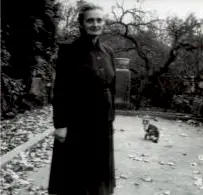
The convent of the Guardian Angel House on Ménesi Street in Budapest was run by nuns of the Order of the Sisters of Mercy. The convent was run by Sister Klára Ráth, who joined the order in 1942. During the Nazi occupation, under the Arrow Cross regime, between 15 October 1944 and February 1945, the convent was under the protection of Swedish diplomat Raoul Wallenberg and sheltered around 100 Jewish women and children. Some of them remembered it in this way.
„I met a group of people who were able to remain human in difficult times. These nuns gave their lives for us. They would go out at night and return with Jewish babies, whom their mothers must have entrusted to them,” said Zsuzsa Kárpáthy Stern, who was 14 when she was sent to the convent thanks to her mother and a Christian friend.
Veronika Szüsz Fehér arrived at the convent at the age of 9, around Christmas 1944. Despite the hard times and the constant Soviet siege, she remembers. We prayed, but it was natural, because they gave us shelter and saved our lives.” During the occupation, Arrow Cross gunmen and the Germans made surprise inspections of the convent. Sister Clare, however, always prevented them from searching the buildings for Jews. These dangerous situations are remembered not only by the children but also by the nuns. They all praised the courage of the Mother Superior.
Sister Klára Klaudia Visy, who also lives in the convent, told of another Arrow Cross raid. They left without success, because Sister Klára had fed and drunk alcohol for hours to make them forget their mission.
Imre Basics, who was a student priest in the convent, recalls. The children were free to pray and did not have to join the congregation.”
István Tóth, the convent’s pastor, said of Sister Klára: „She was a very strong person, she never wavered.” Klára Ráth died in 1991, and was recognized by Yad Vashem in 2010 as the Righteous among the nations.
Sister Klára always prevented searches for Jews in the buildings.
Lajos Pusztai and his wife – house inspectors
Saboteurs of the Arrow Cross decrees
In the Arrow Cross era, the caretakers were in some respects masters of life and death. In most cases, denouncing their Jewish flatmates was tantamount to a death sentence, and the empty flats were often simply robbed by greedy neighbours. Lajos Pusztai was the superintendent of the building at 6 Falk Miksa u. in District V.
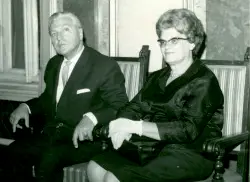
Together with his wife, they undertook a life-saving activity involving great risk, because the register of residents did not mention that there were Jews among them. Among the Jews hiding in the house were also escaped labour servicemen and soldiers. Arrow Cross orders to move in were routinely flouted, and as a result, their Jewish charges in hiding survived the persecution. Even during the siege of Budapest, Lajos Pusztai and his wife protected the property of the Jews entrusted to them.
In the register of residents, they did not mention that there were Jews among them.
Imre Kulifay – Reformed pastor
Helping the refugees
Imre Kulifay, a Reformed pastor, was appointed by the Hungarian Reformed Church in September 1934 to the post of pastor of the French overseas territories in Paris. Before, during and after the Second World War, he had a great responsibility for Jewish and political refugees and prisoners of war. More than 31,000 prisoners were rescued. He also helped refugees during the 1956 revolution. One of the most significant periods of his life and ministry in Paris was during the years of the Second World War, when Jewish families began to flee Hungary to escape the severe hardships that awaited them. Numerous entries in the surviving church registers prove that Imre Kulifay saved many Jews in Paris by quickly registering their conversions and providing them with baptismal certificates. He did all this with outstanding humanity, out of deep Christian conviction, to the glory of God. He also received great help from his wife in saving lives.
Ödönné Erzsébet Korzáti Vékes – psychologist
Who not only helped souls
Psychologist Ödönné Erzsébet Korzáti Vékes was the director of a children’s home for disabled children in Buda. Dedicated to her profession and to children, she did everything she could for the children, and even more than what could have been expected. During the Arrow Cross era, she hid several Jewish children between the ages of three and fourteen in the children’s home. A little girl named Veronika, who would have been difficult to hide because of her very Jewish appearance, was admitted to the home under a pseudonym. The girl’s older sister had previously been deported to the German Reich for forced labour. Her younger sister hid under a pseudonym with Christian papers.
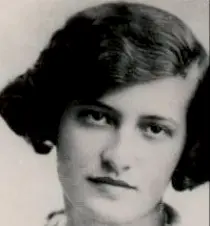
Elisabeth Korzáti was also aware of the mortal threat posed by the Arrow Cross Nazis to those who hid Jews. In the home, she protected the children and, as a trained psychologist, helped them overcome the fear they felt of the Arrow Cross threat. She also helped them to come to terms with their separation from their parents. During the siege of the capital, the orphanage building was hit and damaged. Elizabeth looked for another place to live and took the children with her. After the war, she returned them all to their families. In 1993, Mrs. Ödön Vékes was recognized by Yad Vashem as the Righteous among the nations.
Sándor Dániel – musician
He searched for hiding places and delivered food
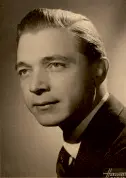
Sándor Dániel studied at the Academy of Music from 1942-44. After the German occupation, he became involved in the rescue work organised and directed by Professor Sándor Mikulay. He searched for hiding places for the persecuted, mainly empty shops and cellars. He was also involved in delivering food to the hiding places, and in distributing documents proving Christianity to persecuted Jews associated with the rescue organisation. Magda Bruck, the wife of one of the Jews he rescued, recalled the young man’s activities. „I knew Daniel well from Budapest in the Nazi days. At the risk of his life, he helped to rescue Jews from the hands of the murderers, including my husband. He brought them food so that they would not starve. Many Jews were saved thanks to non-Jews like Daniel. I wish you a long life!” In 1989, Sándor Dániel was awarded the title of Righteous among the nations by the Yad Vashem Institute.
Dr Géza Petényi – paediatrician
Supporter of the persecuted
As a distinguished member of the progressive Hungarian intelligents, his friends included such personalities as Ferenc Molnár, Frigyes Karinthy and Antal Szerb. He began his work as a paediatrician at the Fehér Kereszt Children’s Hospital, of which he later became director. He valued the independent opinions of others, but disliked taking positions based on authority. He stood up for those who were in difficulty not through negligence but through human error. His greatness of character, his honesty and courage were manifested so many times during his life. He was the first in the country to establish a 30-bed nurses’ home
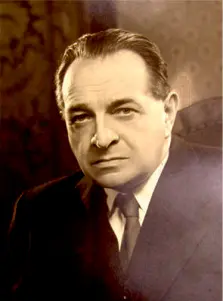
During the Arrow Cross era, many refugees hid in the basement of the hospital (now Children’s Hospital II, Tűzoltó Street Hospital), many of them with money and false papers. Later, during the Stalinist period, he also hired a doctor, who, as a family member convicted in the Concepcion trials, was not employed elsewhere. During the revolution of ’56, the children’s clinic was open to the wounded of the revolution. The tree and plaque planted in the „League of the Righteous” in Jerusalem are a lasting reminder of his life-saving humanitarianism.
In later communist times, he continued to help the prisoners of the Concepcion Trials and the wounded of the 56th Revolution.

